The three cards problem: why the back is red 2 in 3
The three cards problem: red-red, white-white and red-white. You see a red face. Lay out all six faces and the back is red 2 times in 3.
The three cards problem goes like this: three cards sit in a hat. One is red on both sides, one is white on both sides, and one is red on one side and white on the other. You pull a card out at random and look at the side facing you. It's red. What's the chance the other side is red too? Most people say a half. The answer is 2/3.
What are the rules?
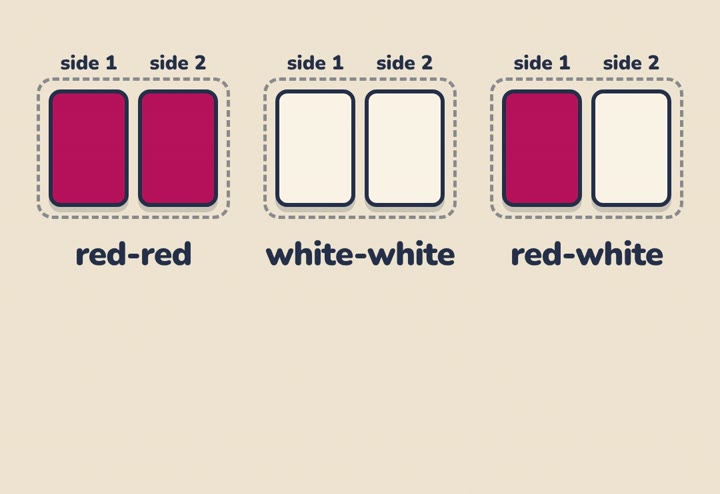
There are three cards: red-red, white-white and red-white. You draw one of them at random, each equally likely, and it comes out with a random side facing you, either side equally likely. You see only that side.
Why does it feel like 50-50?
Once you see red, the white-white card is ruled out. That leaves two cards that could be in your hand, red-red and red-white, and it's tempting to call them equally likely. Then the back is red half the time.
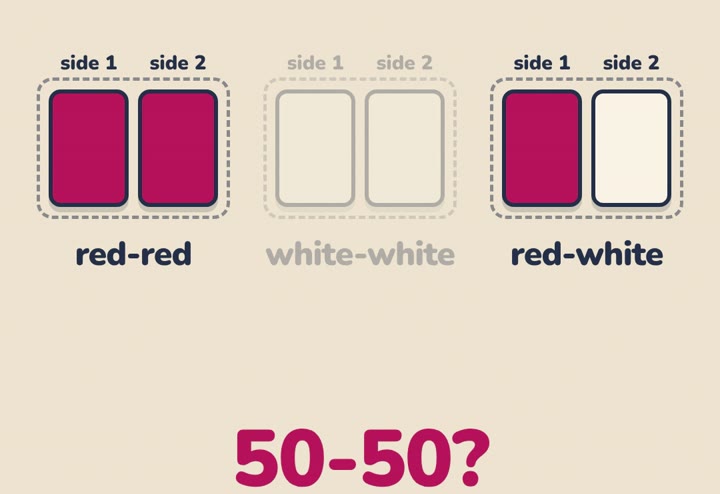
The trouble is that the cards are not what's equally likely once you have seen a colour. The faces are.
What are the equally likely cases?
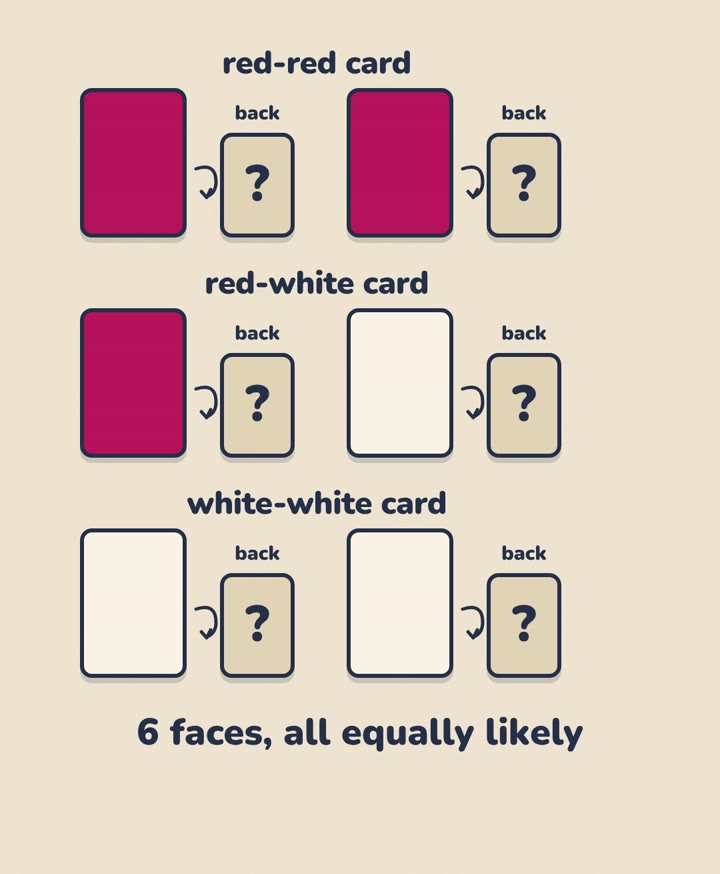
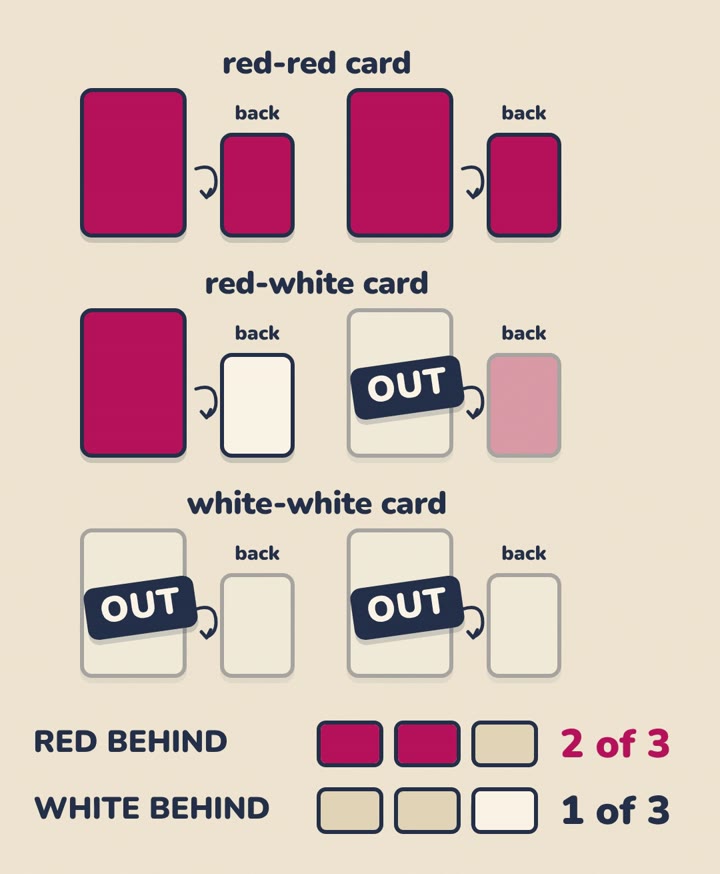
Every card has two sides, so there are six faces that could end up facing you, and each is exactly as likely as any other: a random card (1 in 3) times a random side (1 in 2) gives each face a 1 in 6 chance. Lay them out, one row per card, with the hidden back next to each face.
How does each face play out?
- Red-red card, side 1 up: you see red, and the back is red.
- Red-red card, side 2 up: you see red, and the back is red.
- Red-white card, red side up: you see red, and the back is white.
- Red-white card, white side up: you see white. That isn't what happened, so it's out.
- White-white card, either side up: you see white both times. Both out.
Count
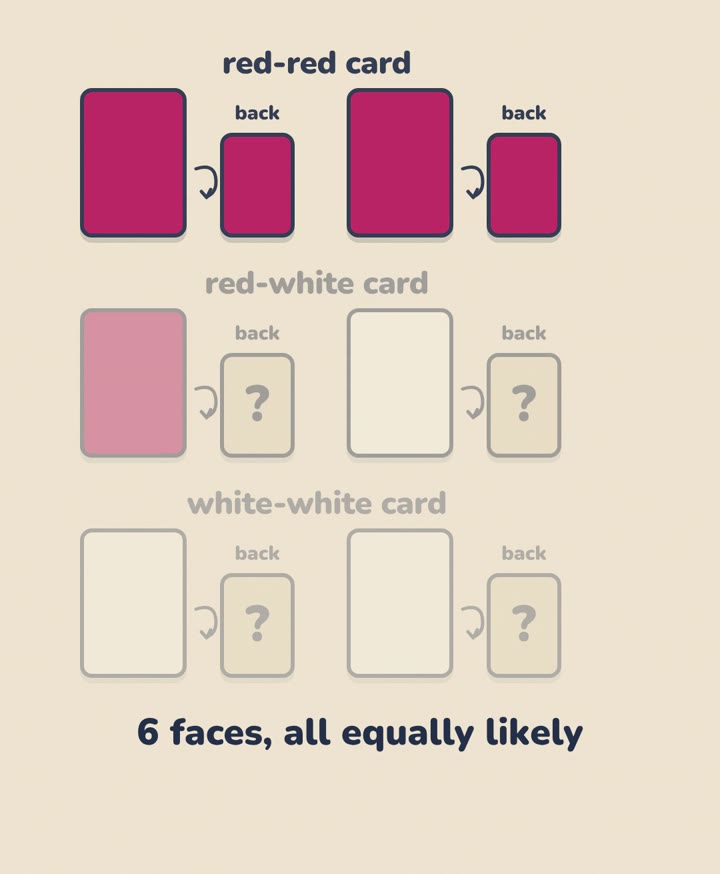
| Face you see | Back | Counts? |
|---|---|---|
| red-red, side 1 | red | yes, red behind |
| red-red, side 2 | red | yes, red behind |
| red-white, red side | white | yes, white behind |
| red-white, white side | red | no, you'd see white |
| white-white, side 1 | white | no |
| white-white, side 2 | white | no |
Three equally likely red faces could be the one you're looking at. Two of them have red behind. So the chance is 2/3.
Why isn't it a half?
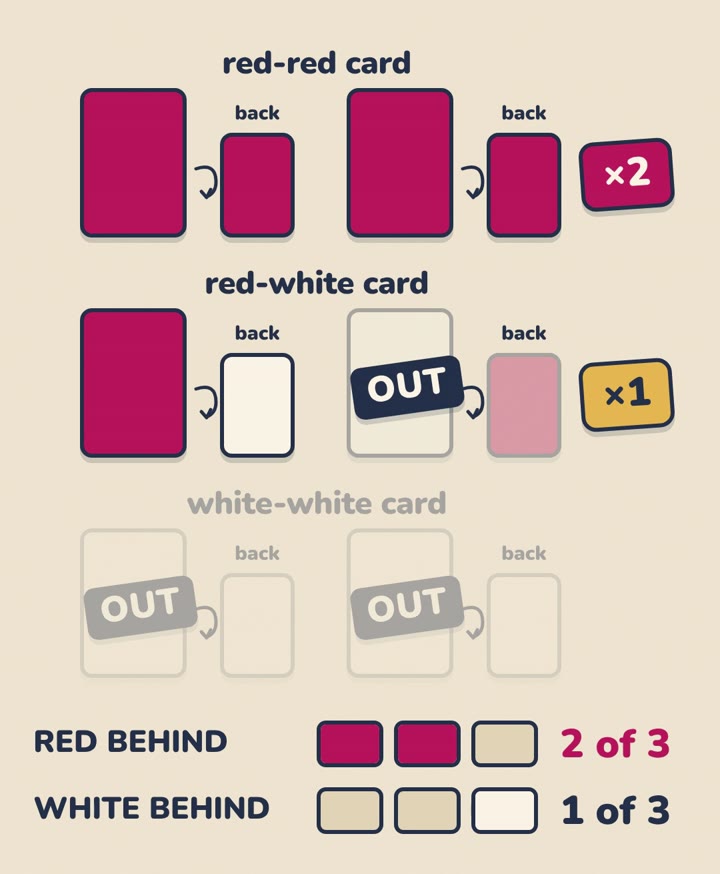
The red-red card shows red twice as often as the red-white card, because both of its sides are red. Seeing red is evidence, and it points twice as strongly at the red-red card. So of the two cards still possible, red-red is the more likely one, 2 to 1.
This puzzle is often called Bertrand's box paradox, and it's the same trap as the Monty Hall problem: counting what's left without asking how likely each piece of it was to show you what you saw.
Check it with code
Count the six faces exactly, then simulate a million draws and keep only those that show red:
from fractions import Fraction
import random

cards = [('R', 'R'), ('W', 'W'), ('R', 'W')]
faces = [(c[k], c[1 - k]) for c in cards for k in (0, 1)]   # (side up, back): 6 faces
red = [f for f in faces if f[0] == 'R']
both = [f for f in red if f[1] == 'R']
print('faces:', len(faces))
print('red faces:', len(red))
print('red behind:', len(both), '->', Fraction(len(both), len(red)))

rng = random.Random(7)
seen = rb = 0
for _ in range(1_000_000):
    c = rng.choice(cards)
    k = rng.randrange(2)
    if c[k] == 'R':
        seen += 1
        rb += c[1 - k] == 'R'
print(f'simulated: {rb / seen:.4f}')
Output:
faces: 6
red faces: 3
red behind: 2 -> 2/3
simulated: 0.6677
Try it
Add a fourth card to the hat, another red-white one. You draw a card at random and see a red face. Is the chance that the back is red still 2/3? Lay out all eight faces and count the red ones.